Within the structured curriculums of high school education, art class offers a space where students can freely prioritize and practice creativity. At Yutan, students can continue to take art class year after year, working their way up in independence, creativity and difficulty.

“Art 1 probably gets through 7-9 projects a quarter. Art 2 finishes about 5-6 projects per quarter. Art 3 and Honors Art typically complete 2-3 projects a quarter,” art teacher Sarah Portis said. “Art 3 and Honors Art basically get to choose all of their projects, so they are responsible for researching and planning. I’m there to help guide them, but they are in charge. I feel like this gives students the opportunity to express themselves while developing their skills.”
For Portis, allowing students to practice open-ended learning techniques is a principal part of her teaching philosophy.
“I usually try to give some sort of choice for most projects. We might be learning how to use watercolor, so after some experimentation to learn different techniques, the students can pick a subject to demonstrate those different watercolor techniques. After students have experimented with a variety of different mediums and art styles, I allow them to choose their own projects,” Portis said.
Although students value choosing their own assignments, Portis feels that sometimes this can limit a student’s abilities.
“Sometimes students have a hard time picking a project. Sometimes they pick projects that don’t challenge them. But we all face that in life, so this can be a positive lesson. They might learn that if they don’t choose something and get started, they won’t accomplish anything! They might learn that by not challenging themselves, they get kind of bored or their work isn’t as impressive,” Portis said.
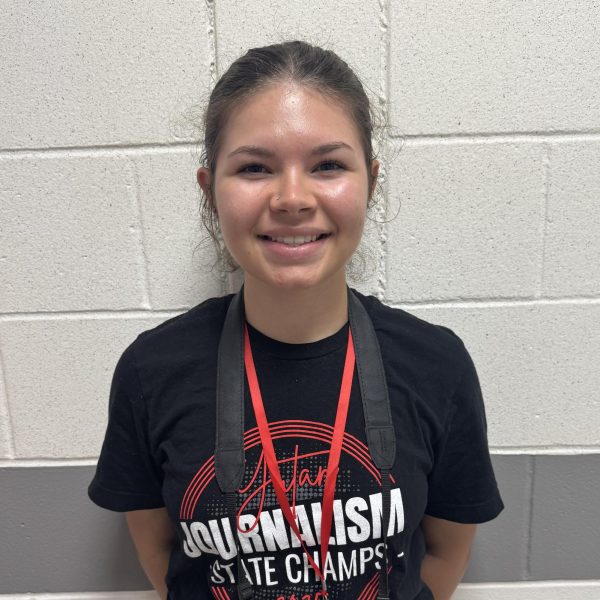
Senior Madalynn Bussing, who is in Honors Art, appreciates having the opportunity to choose which projects to work on in addition to having some structured assignments.
“It’s nice to know what you have to do, and then you can look up what you want to do in whatever assignment that you have you do. Otherwise, if you have more freedom, you can choose your own project and what you want to do. For art, I like a little bit of independence but also having some projects assigned to me,” Bussing said.

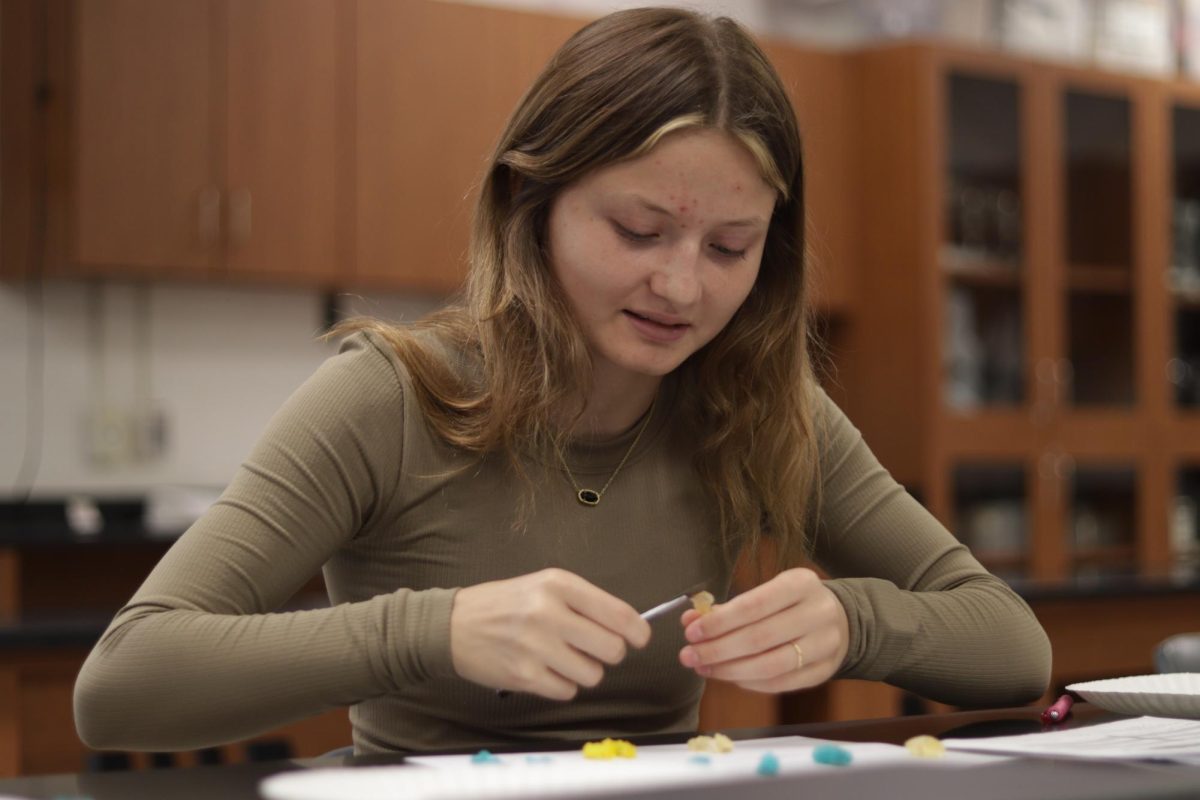
Students who prefer choosing their projects, such as Honors Art senior Mason Smith, also see the benefits of some structure.
“I prefer to choose what my projects are, but at the same time, I understand when they’re structured—because Mrs. Portis, our art teacher, she wants to guide us into different mediums so we’re not just stuck in our ways and we’re just drawing the same thing over and over again,” Smith said. “And I think that really helped because I don’t really do painting that much. So when I did that, I felt really proud of myself because it was the first big art acrylic paint thing that I did.”
Not only does art class push students out of their comfort zone, but it also teaches perseverance through frustrating or difficult situations.
“You can’t rush art, and it kind of allows you to be not only patient with the tools that you have but patient with yourself—because instead of getting upset about a drawing, ‘Hey, this looks horrible,’ you take your eraser, erase it and you try again until you think it’s good enough,” Smith said.
Overall, letting students develop more freedom, learn new skills and apply innovation in art class are lessons Portis hopes students appreciate in the future.
“My goal is to help students develop critical thinking skills. I don’t expect to produce a bunch of professional artists, but I hope that students will find joy in art. It is a great hobby! Furthermore, I hope they develop an appreciation for an artist’s voice, time, dedication and talent. Being an artist isn’t easy. It takes time and effort to build skills. It takes courage to put your artwork out there to be judged,” Portis said. “If students can understand all of that, hopefully they will be grateful for how much the artist gives to the world.”