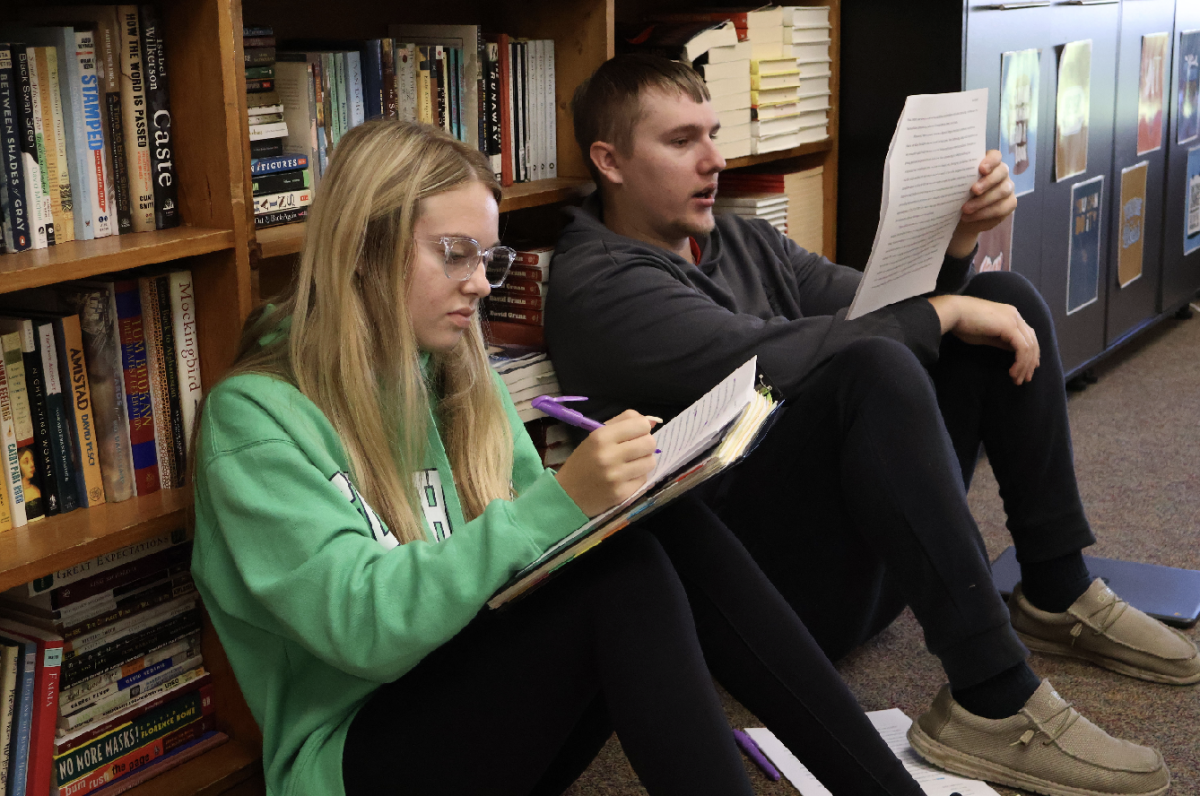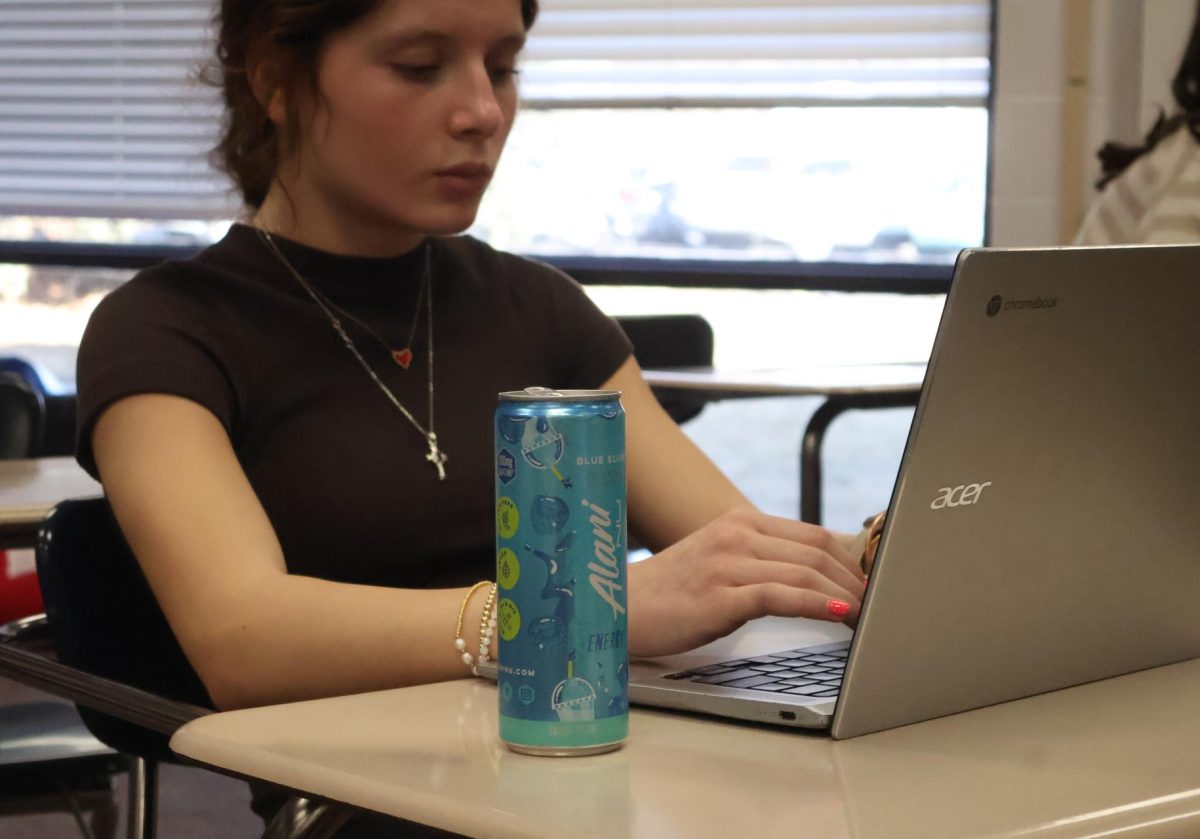

When I first started high school, AI was something that I was utterly oblivious to, not using it in my daily or school life. If I were trying to complete an assignment, I would have to deep-dive into countless Quizlets to find half the vocabulary in the class that I was taking at the time. Now that I am a senior, I can no longer say that. Today, I can sit in the back of a class, clueless, watching underclassmen mindlessly enter information into an app named “Chat GPT” while it completes the homework for them. Students are learning how to work with AI, finding ways to incorporate it within their school day, for the better and worse. The evolution of AI has brought problems such as cheating and dependence on technology; however, it is not going away, so students must learn the benefits of AI and use it correctly.
As AI has evolved, students have learned how to exploit loopholes in cheating. Cheating has always been a thing, just not with this technology that is evolving as we speak. A study conducted by Emmanuel College found that 70 percent to 80 percent of high school students have cheated using AI during their time in school. An example would involve an English class, where I had to write my own obituary. We wrote about how we died, when, where and what we accomplished in our lives; while working on this, I saw many students in my class have ChatGPT write it for them instead of taking the time to complete the assignment themselves. The problem here is how students cheated by using AI to write a creative story that was supposed to be completed by themselves. In the end the teacher found out that there was cheating being done, making the students redo the assignment.
English isn’t the only subject where students can cheat using AI. I can use a personal experience for this; there have been many late nights when I was tired and didn’t want to do the rest of my math homework. I would proceed to take a picture of it and send it to an app named “Photomath.” It would solve my math homework for me and even show me the work. A few days later, I had to complete a quiz. Due to the fact that I hadn’t taken the time to learn the material, I did very poorly, learning my lesson on AI usage. AI doesn’t help students learn to their full potential due to cheating and easy access to AI. It may help complete homework at the time; however, later on in class, it will come back and bite you in the rear. From a January 2026 survey, 53.8 percent of Yutan teachers stated that AI has affected their classroom mostly negatively. One teacher specifically stated, “AI is making it way too easy for students to cheat and not to learn the content themselves.”
Cheating isn’t the only issue we have with AI; students are too dependent on this form of technology, making them reliant on an app. This puts a block on their learning and open-mindedness to want to expand their learning. Most students have basic skills that aren’t being put to use; AI is reducing students’ ability to develop critical thinking skills that they can take outside of the classroom. The students who only use AI to answer their questions or complete their homework will, truthfully, not go as far academically as the students who take the time to learn. “AI is a definite problem that people are becoming dependent on; it only creates a problem for them and their future,” one Yutan senior stated.
Though ChatGPT and other AI sites have many different tools that are being used incorrectly, there are countless possibilities for it to be used to assist our learning in and out of the classroom. When writing a story for an assignment, instead of having AI write your story for you, ask it to give you points to help build a structure for your story. When you don’t understand a math problem, AI can help break it down, giving you different viewpoints to help build your understanding. In this way AI can be like a personal tutor to students who are struggling. “These systems utilize natural language processing and machine learning algorithms to engage in real-time conversations with students, answering their questions, providing explanations and offering targeted feedback. Intelligent tutoring systems empower students to seek assistance whenever needed, enhancing their understanding of complex concepts and promoting self-directed learning,” Urbe University professor Abel Guerra stated.
Furthermore, AI can be used in many different ways to help build your knowledge in any class you are taking in school. At times, perplexing topics are being taught in the classroom. AI can help you break down your issue while giving more information that wasn’t included in the lesson. Another positive aspect would be the more comprehensive explanation of facts about a person or the topic’s background. It can and should be used as a tool to help and guide us in the right direction. It starts with the willingness of students to want to learn and grow to the best of their abilities. AI isn’t the solution to students’ problems but a stepping stone that can lead them in many different directions, rather than one blocked path.
I believe that AI can be used for good in the classroom but also used in the outside world as well. For example, AI can give you a meal plan for a week, list ideas for crafts, suggest some new hobbies to try out and even help you understand anything going on around the world. In fact, over a third of Yutan’s teachers stated they often use AI outside of their job at school. One teacher stated she used it to help plan their wedding, giving her ideas.
AI is only evolving and changing every day; it isn’t going anywhere, so we can’t pretend it doesn’t exist. However, because our knowledge as students is at risk, and that includes our future and the future of generations to come, I believe all students need to learn how to use AI correctly. I believe it can be done, but I cannot be the only one who believes. So the next time you open AI to complete an assignment, remember that it should help you learn instead of having it complete things for you. You are the person who controls whether it does or not. We are in control of AI; AI is not in control of us.